Restaurant interior design: 5 ways to turn décor into business value
Restaurant design is more than a finishing cost. Done well, it can strengthen perceived value, extend the guest experience and give people more reasons to choose, share and remember a venue.
A space can keep working long after the build is complete.
In a restaurant, design is not only about creating a beautiful image. It shapes how the venue is perceived, talked about and remembered.
The objective is not to accumulate visual effects. It is to build an identity strong enough to support the guest experience, differentiate the venue and reinforce its commercial positioning.
Dwell time
A comfortable, coherent and immersive atmosphere can encourage guests to extend the moment. When they stay longer, there may naturally be more opportunities for an additional course, a second drink, coffee or a digestif.
Design becomes a quiet part of the commercial experience. It does not push people to consume; it simply gives them fewer reasons to leave.
Social sharing
An instantly recognisable restaurant gives guests a reason to photograph the space as well as the food. A signature ceiling, artwork, distinctive lighting or architectural detail can become a visual marker associated with the venue.
Content shared by guests then extends the restaurant’s presence beyond its walls and contributes to organic visibility that feels more authentic than a standalone advertising image.
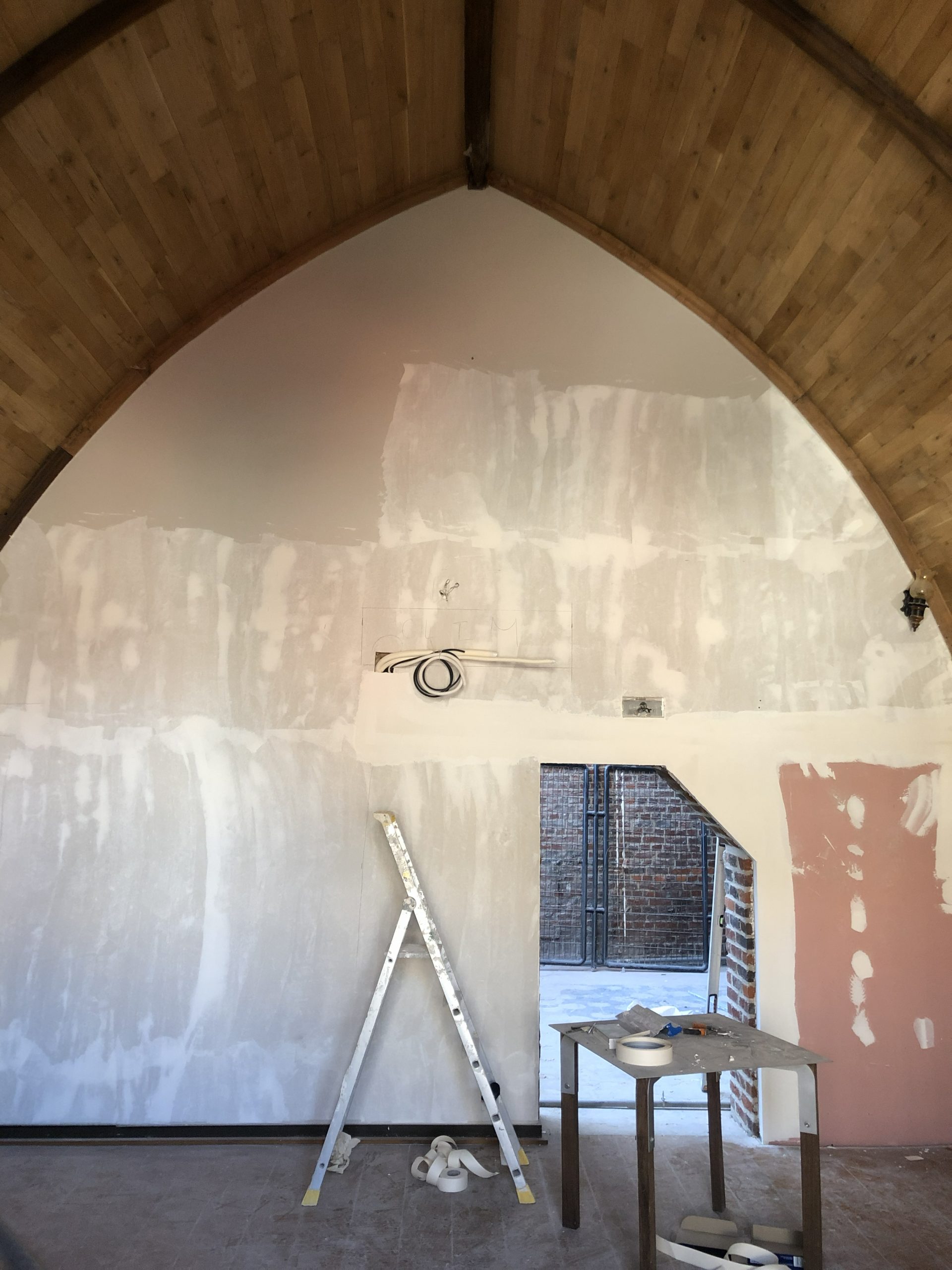
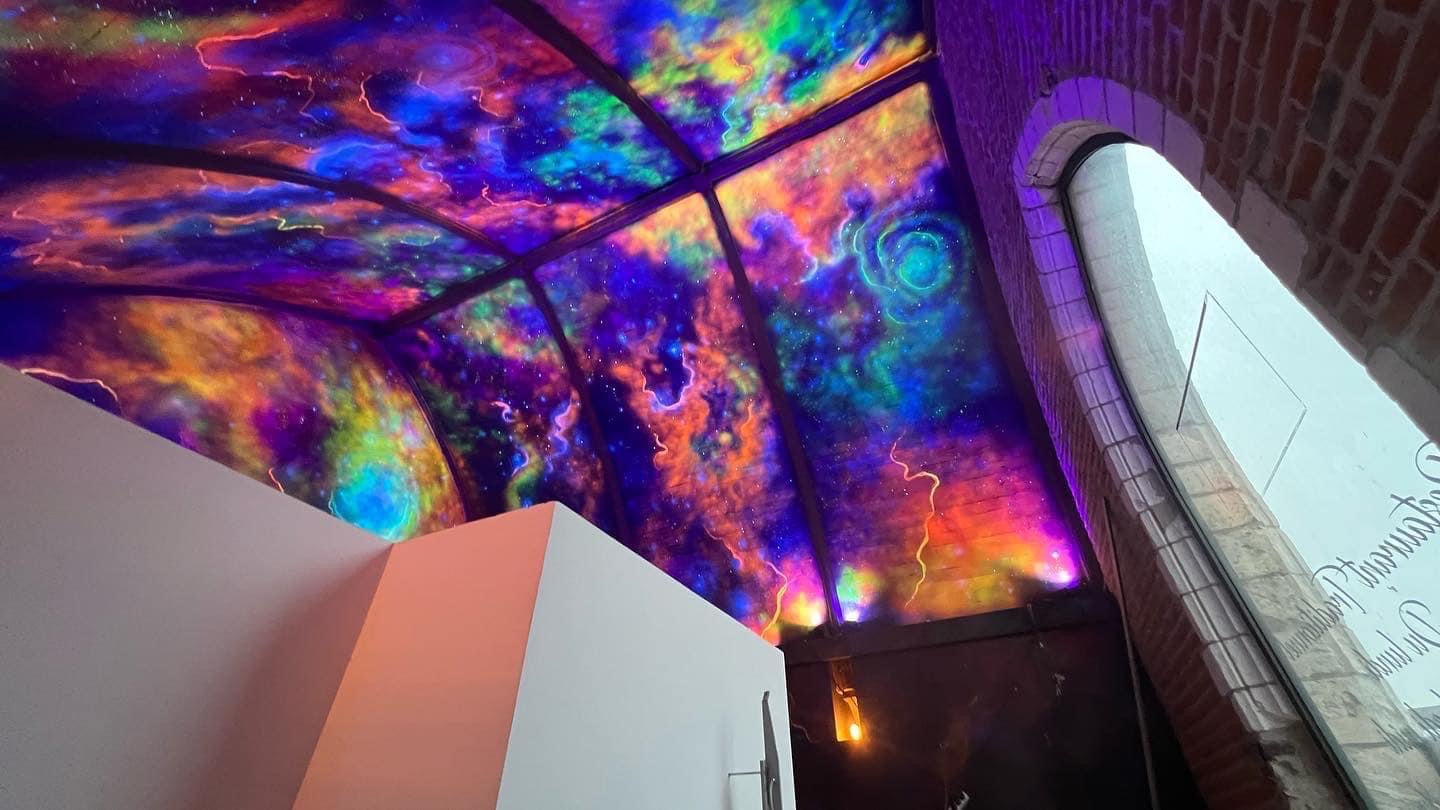

Maison Inoubliée · Real projects where décor, light and identity become part of the guest experience.
Memorability
In a city full of good places to eat, a restaurant benefits from being easy to describe in a few words. A signature element gives guests a simple image to remember and pass on.
People no longer recommend only “a good restaurant”. They talk about the venue with the spatial ceiling, the enveloping room or the detail they have not seen anywhere else. Design becomes part of the venue’s identity in conversation.
Private events
A room with a strong identity can also become more attractive for occasional uses such as private dinners, product launches, brand events, shoots or filming.
The restaurant is no longer offering seats alone. It also provides a distinctive setting for professional clients looking for a venue that already has its own visual language.
Perceived value
The quality of the finishes, materials, lighting and overall coherence influences how positioning is perceived. A venue considered down to the details feels more intentional, distinctive and harder to reproduce.
Design can therefore support a premium position, provided that the food, service and spatial experience all tell the same story.
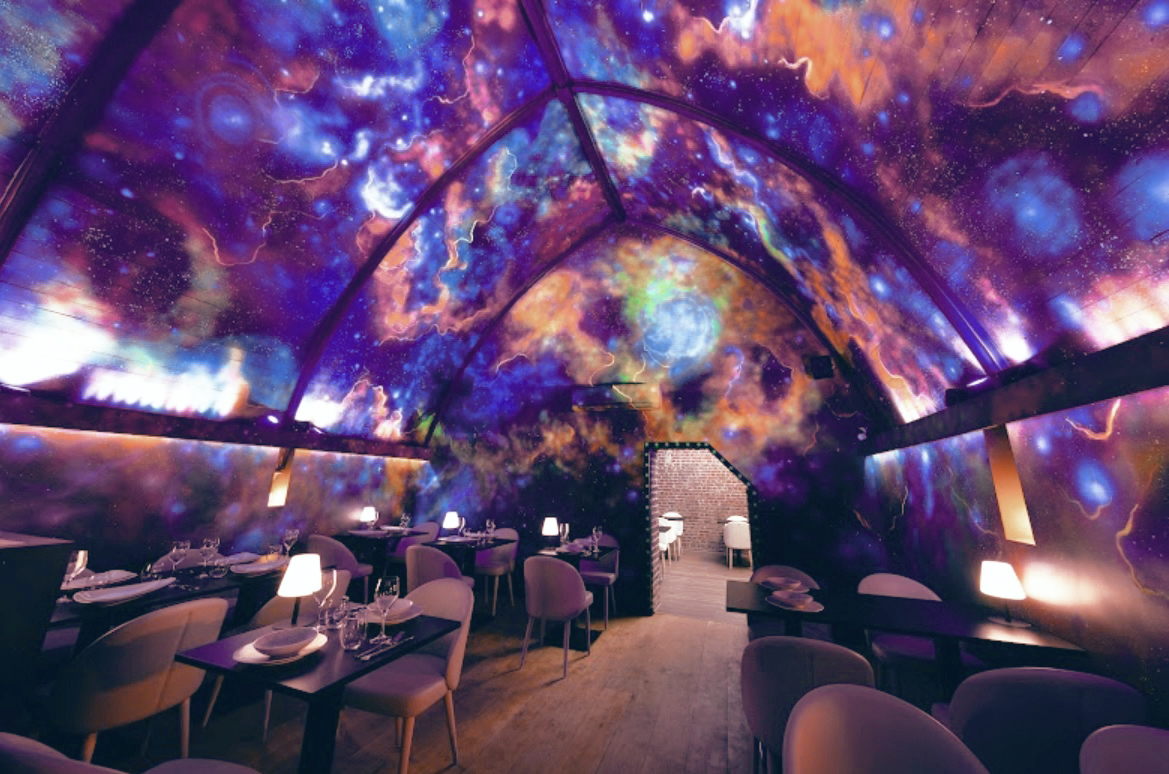
Arcadia: turning the ceiling into a signature element.
For Arcadia in Lille, Maison Inoubliée transformed the room’s ceiling into an immersive spatial universe. The intervention concentrates the spectacular effect on one major surface rather than overloading the entire venue.
Composition, lighting and reactive pigments give the ceiling a different presence depending on the atmosphere. The result is an instantly recognisable visual marker designed as an integral part of the experience.
Explore our projects →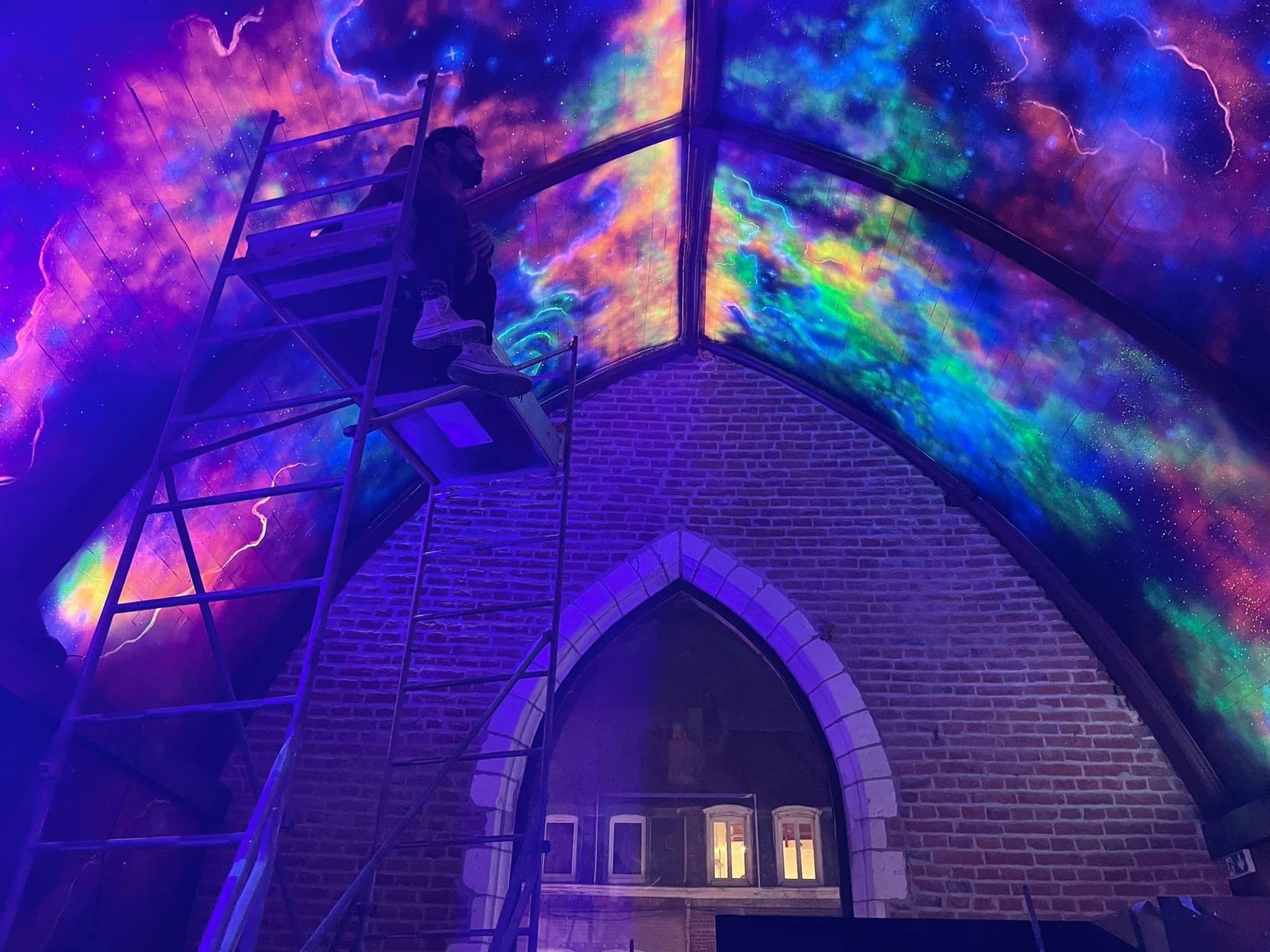
The real question is not only “what does the décor cost?”, but “what role does it play in the value of the experience?”
Cost or investment?
Bespoke design costs more than a standard cosmetic refurbishment. It should therefore be judged not only as an aesthetic line in the build budget, but by what it contributes to the positioning of the venue.
If it makes the address more recognisable, supports perceived value, encourages sharing and opens up additional uses, design becomes a tool that can support the business for years.
Imagining a space of your own?
We create bespoke immersive experiences shaped around your space, identity and ambitions.