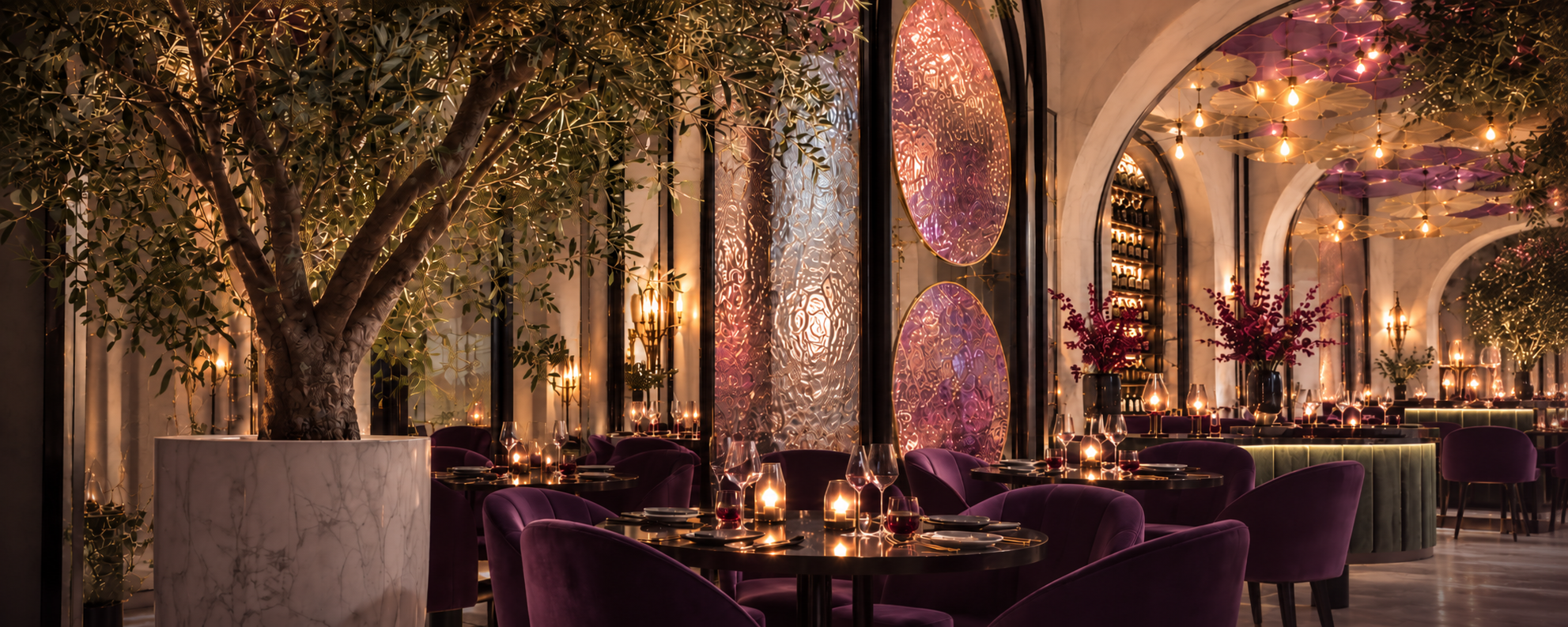
5 principles for creating a truly immersive space
Beyond spectacular décor, an immersive space is shaped by visual hierarchy, light, materials and the way the environment reveals itself.
Designing an immersive space means orchestrating emotion.
Immersion is not created by piling up visual effects. It comes from the orchestration of a memorable identity, a sensory atmosphere and a coherent spatial experience.
Whether it is a restaurant, hotel, bar, spa or cultural venue, every project has its own balance. Our approach to immersive design brings architecture, lighting, materials, art, furniture and scenography together to create a coherent, distinctive and memorable whole.
One focal point, not an accumulation
An immersive space becomes more powerful when it is built around one signature element strong enough to crystallise its identity and make the project instantly legible.
Rather than multiplying effects, the goal is to choose a memorable focal point, designed in context, and allow the rest of the space to breathe. This contrast between intensity and restraint makes the intervention clearer and more enduring.
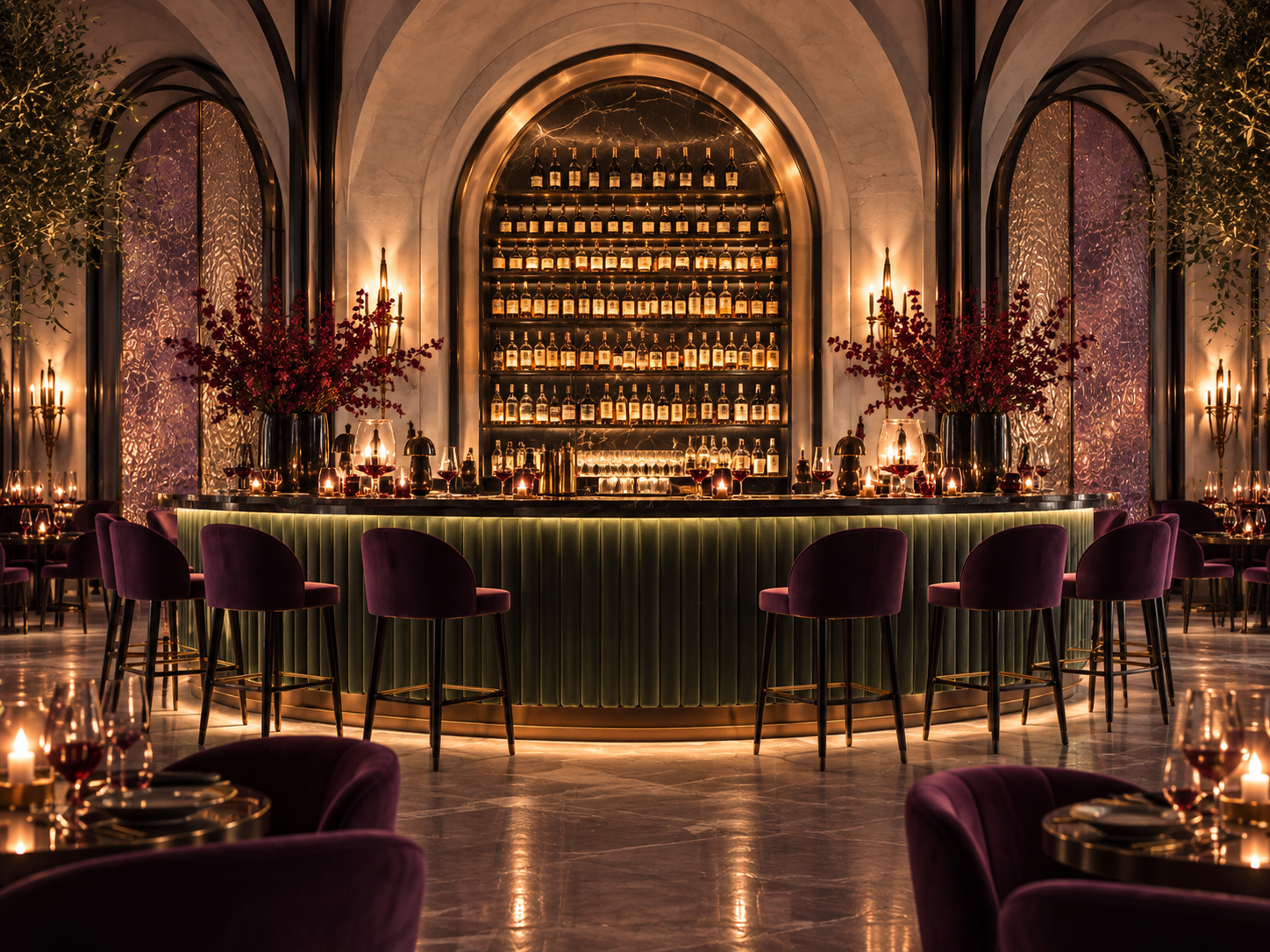
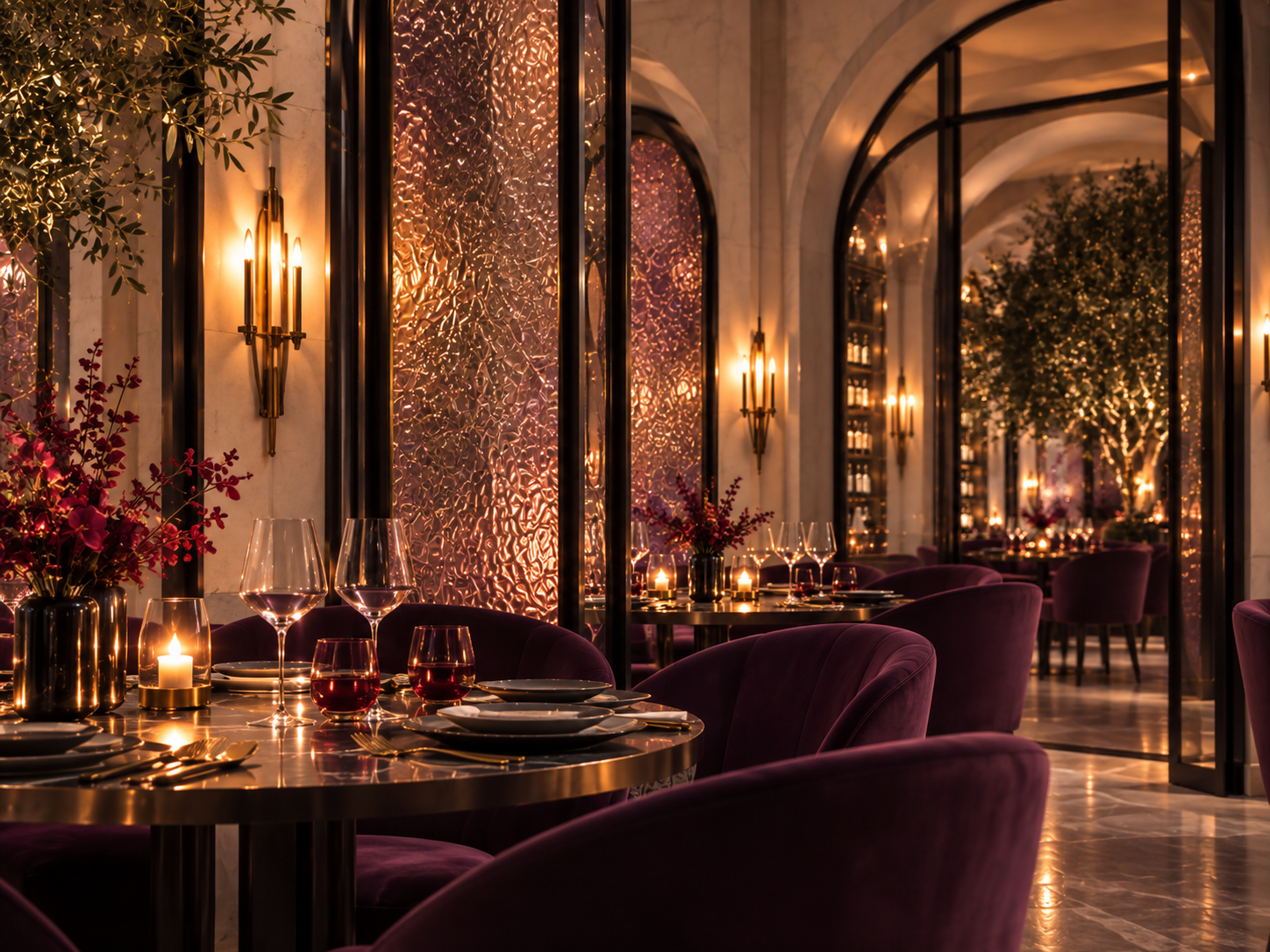
Light shapes the experience
Light does more than illuminate. It structures the space, directs the eye, reveals materials and creates hierarchy between different volumes.
A layered approach combining general, accent and ambient lighting creates atmospheres that can evolve. The same space can feel entirely different from day to night without changing its architecture.
Light can transform the perception of a space without altering its architecture.
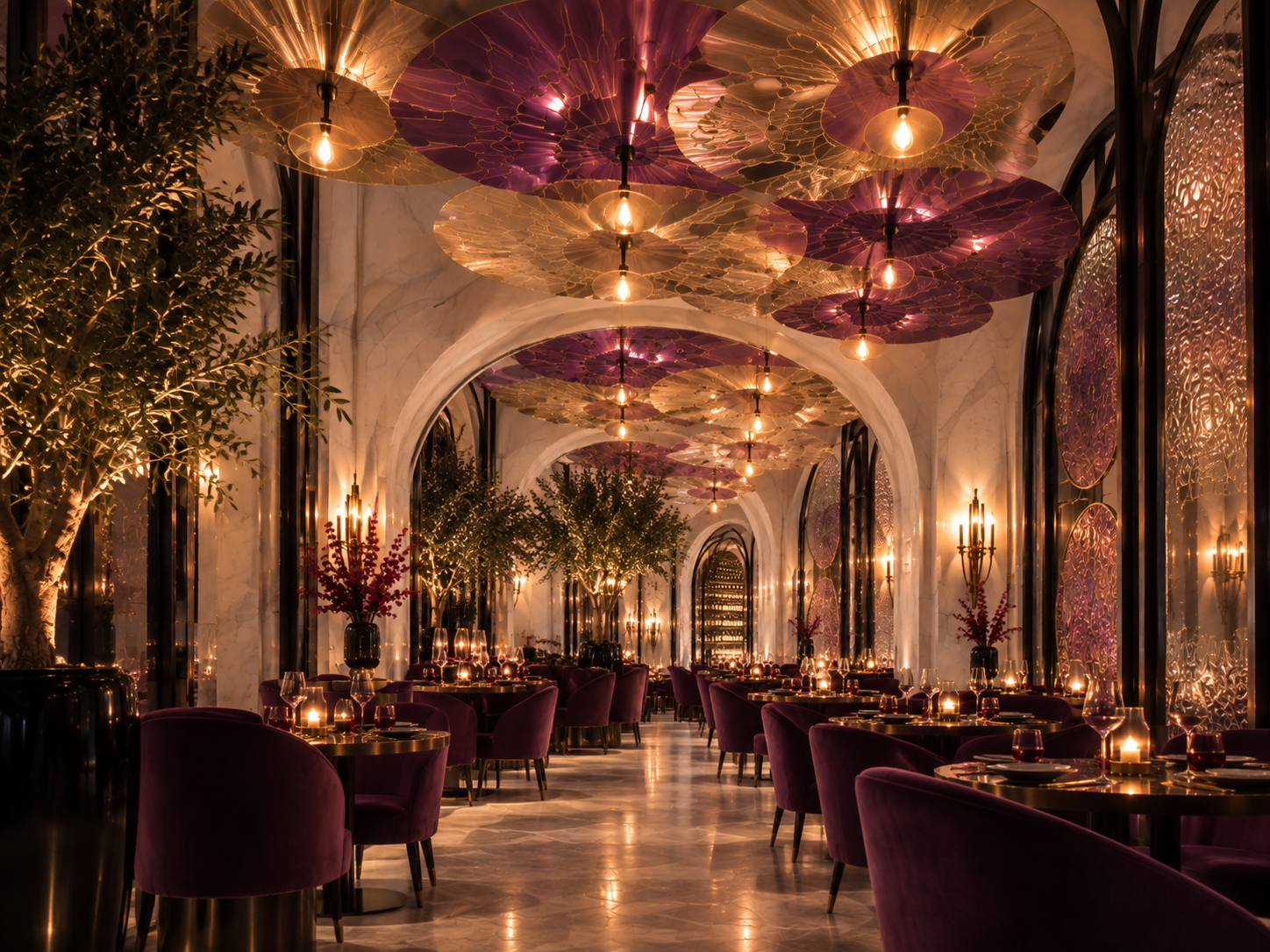
The ceiling is a fifth façade
Often overlooked, the ceiling has enormous narrative potential. When treated as a true design surface, it can alter the perception of scale and immediately envelop the visitor.
Fresco, suspended structure, lighting installation, material treatment or three-dimensional composition: the ceiling can extend the story of a space, provided it remains coherent with the overall architecture.
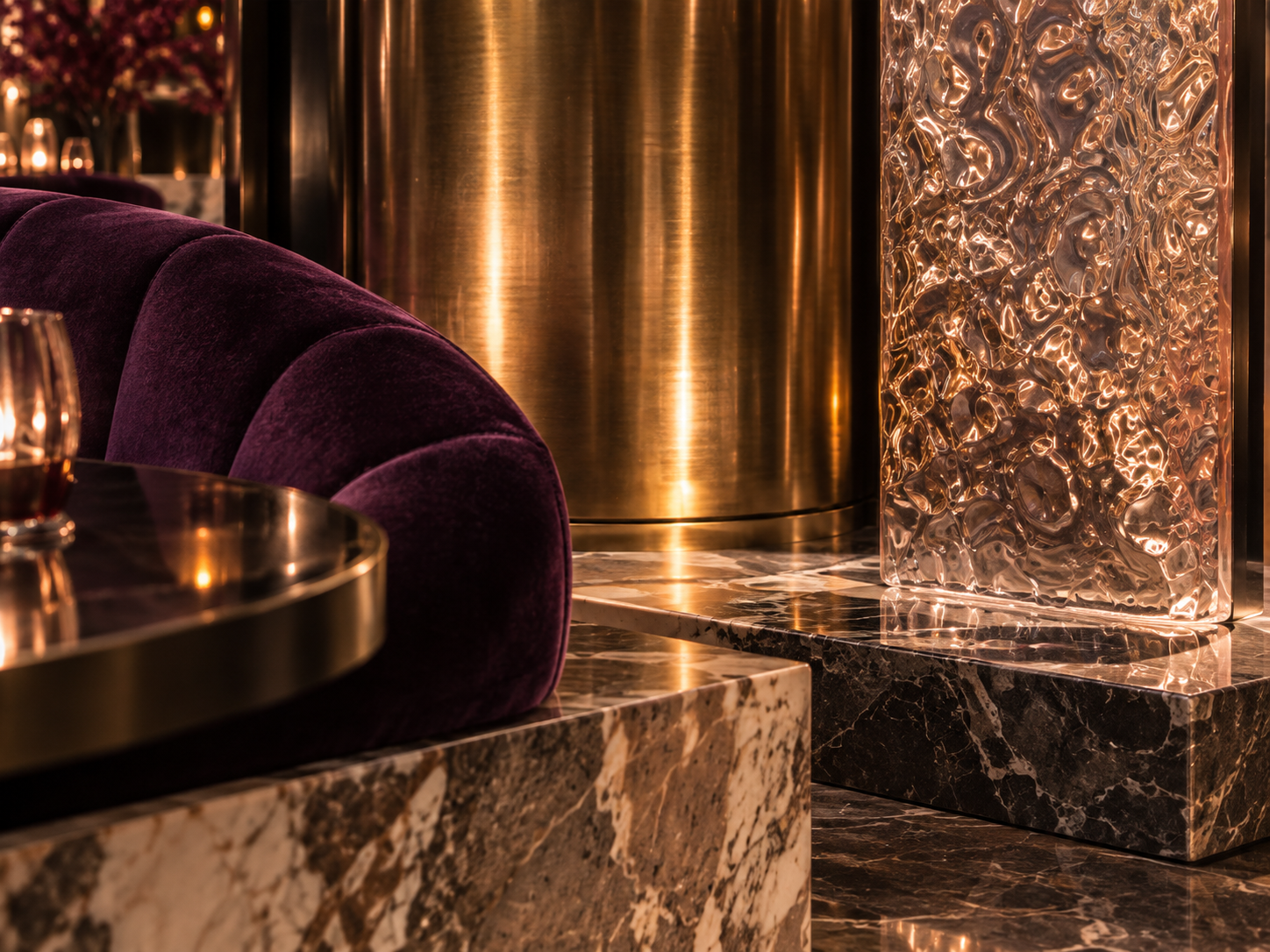
Materials give identity depth
Materials engage touch as much as sight. They create contrast, absorb or reflect light and bring an essential sensory dimension to immersion.
The combination of mineral materials, textured surfaces, metals, worked glass and enveloping textiles gives the space depth and richness, down to the details closest to the guest.
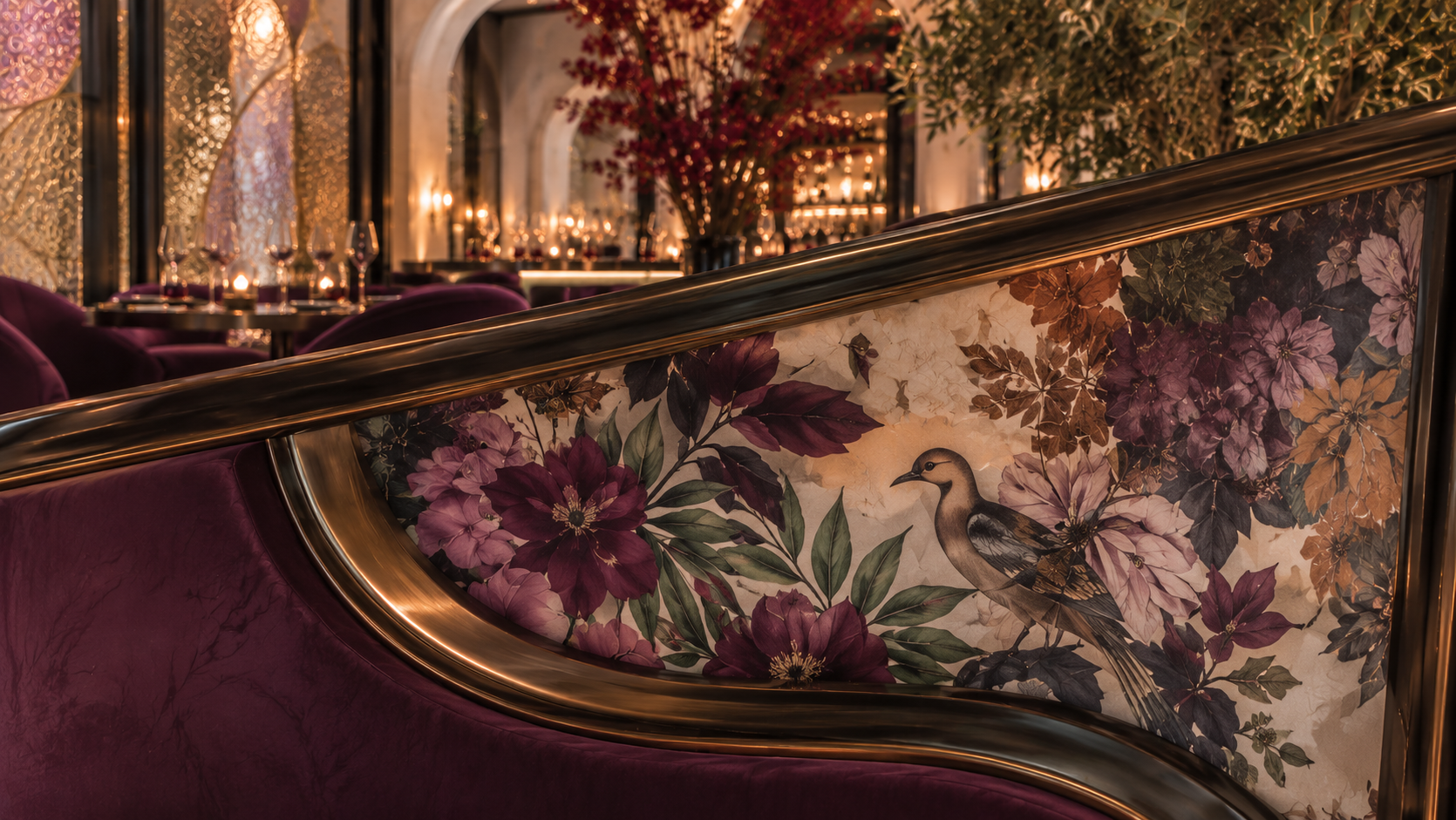
A space should unfold like a journey
Immersion is experienced over time. From the entrance to more intimate areas, each sequence contributes to a fluid and coherent experience.
The journey creates rhythm, allows moments of surprise and discovery, and naturally invites guests to stay longer. Everything should not be revealed at first glance.
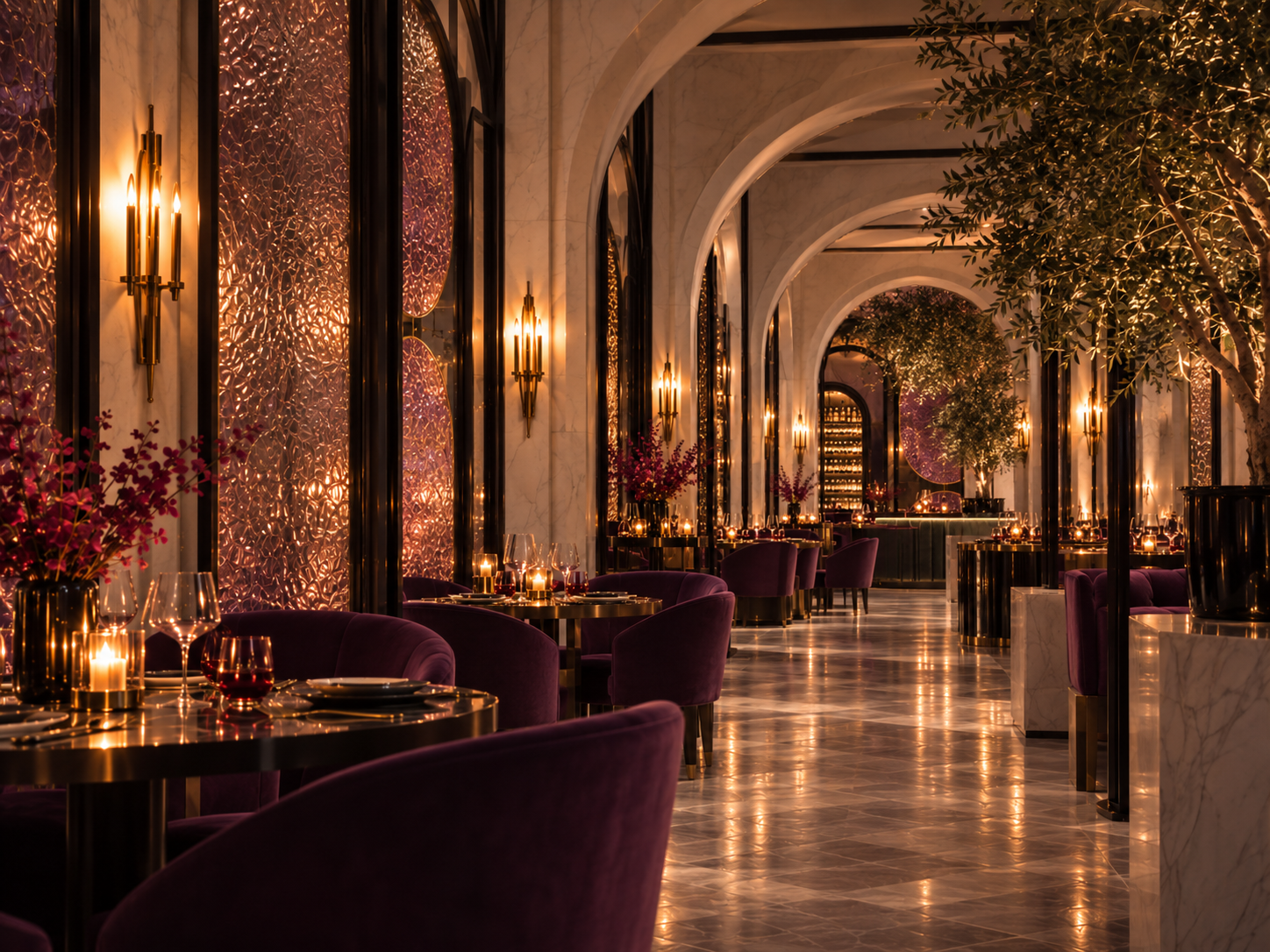
When design becomes a business driver.
An immersive and memorable venue can strengthen perceived value, encourage spontaneous content creation and give guests another reason to choose one address over another.
When aligned with the positioning of the venue, design does more than serve aesthetics. It supports the experience, communication and differentiation of the brand.
The goal is not to create spectacle for its own sake, but an identity strong enough to be recognised, shared and remembered. This approach can be seen across our projects, where each intervention responds to a different context.
Imagining a space of your own?
We create bespoke immersive experiences shaped around your space, identity and ambitions.